
How to Think Like a Computer Scientist: Learning with Python - is an introduction to computer science using the Python programming language. It covers the basics of computer programming, including variables and values, functions, conditionals and control flow, program development and debugging. Later chapters cover basic algorithms and data structures.
For many researchers, Python is a first-class tool mainly because of its libraries for storing, manipulating, and gaining insight from data. Several resources exist for individual pieces of this data science stack, but only with the Python Data Science Handbook do you get them all - IPython, NumPy, Pandas, Matplotlib, Scikit-Learn, and other related tools. Working scientists and data cru
Computer graphics programming books are often math-heavy and intimidating for newcomers. Not this one. Computer Graphics from Scratch takes a simpler approach by keeping the math to a minimum and focusing on only one aspect of computer graphics, 3D rendering. You'll build two complete, fully functional renderers: a raytracer, which simulates rays of light as they bounce off objects, and
This open-access book serves as a comprehensive guide for C++ programmers looking to master Threading Building Blocks (TBB). Authored by two experts in TBB and parallel programming, the book distills decades of collective experience in developing and teaching parallel programming concepts, presenting insights in a clear and accessible manner. Today's TBB starts with foundational principl
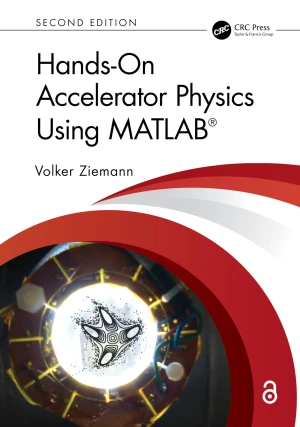
Hands-On Accelerator Physics Using MATLAB, 2nd Edition, provides a broad introduction into the physics and the technology of particle accelerators from synchrotron light sources to high-energy colliders. It covers the design of beam optics, magnets, and radio-frequency systems, followed by a discussion of beam instrumentation and correction algorithms. Later chapters deal with the intera
This book presents computer programming as a key method for solving mathematical problems. This second edition of the well-received book has been extensively revised: All code is now written in Python version 3.6 (no longer version 2.7). In addition, the two first chapters of the previous edition have been extended and split up into five new chapters, thus expanding the introduction to p
This book presents computer programming as a key method for solving mathematical problems. There are two versions of the book, one for MATLAB and one for Python. The book was inspired by the Springer book TCSE 6: A Primer on Scientific Programming with Python (by Langtangen), but the style is more accessible and concise, in keeping with the needs of engineering students.The book outlines
This book presents computer programming as a key method for solving mathematical problems. There are two versions of the book, one for MATLAB and one for Python. The book was inspired by the Springer book TCSE 6: A Primer on Scientific Programming with Python (by Langtangen), but the style is more accessible and concise, in keeping with the needs of engineering students. The book outline
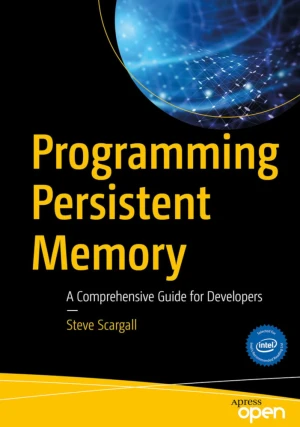
Beginning and experienced programmers will use this comprehensive guide to persistent memory programming. You will understand how persistent memory brings together several new software/hardware requirements, and offers great promise for better performance and faster application startup times - a huge leap forward in byte-addressable capacity compared with current DRAM offerings. This rev
How to Think Like a Computer Scientist is an introductory programming book based on the OCaml language. It is a modified version of Think Python by Allen Downey. It is intended for newcomers to programming and also those who know some programming but want to learn programming in the function-oriented paradigm, or those who simply want to learn OCaml. OCaml is a powerful high-level progra