
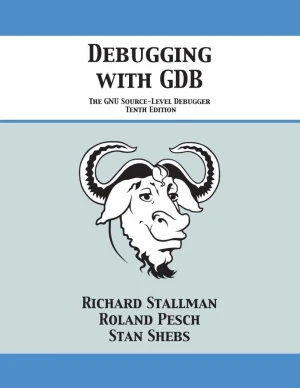
The GNU Debugger allows you to see what is going on "inside" a program while it executes - or what a program was doing at the moment it crashed. GDB supports C, C++, Java, Fortran and Assembly among other languages; it is also designed to work closely with the GNU Compiler Collection (GCC). The GNU Debugger Program has four special features that helps you catch bugs in the act: It starts
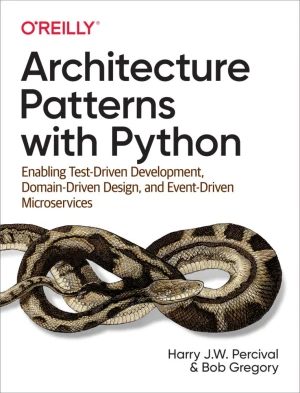
As Python continues to grow in popularity, projects are becoming larger and more complex. Many Python developers are taking an interest in high-level software design patterns such as hexagonal/clean architecture, event-driven architecture, and the strategic patterns prescribed by domain-driven design (DDD). But translating those patterns into Python isn't always straightforward. With thi
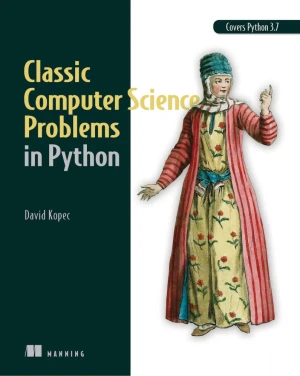
Classic Computer Science Problems in Python deepens your knowledge of problem solving techniques from the realm of computer science by challenging you with time-tested scenarios, exercises, and algorithms. As you work through examples in search, clustering, graphs, and more, you'll remember important things you've forgotten and discover classic solutions to your "new" problems! Computer
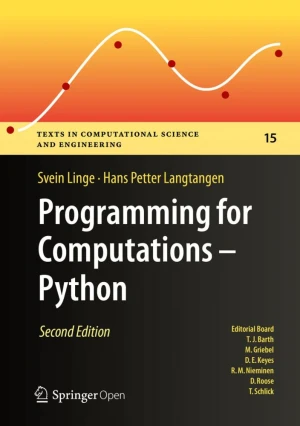
This book presents computer programming as a key method for solving mathematical problems. This second edition of the well-received book has been extensively revised: All code is now written in Python version 3.6 (no longer version 2.7). In addition, the two first chapters of the previous edition have been extended and split up into five new chapters, thus expanding the introduction to p
Games have long been excellent benchmarks for AI algorithms for two reasons. Initially, games are developed to assess and challenge human intelligence, and the variety of games can provide a rich context for evaluating different cognitive and decision-making abilities. Secondly, addressing complex real-world challenges often requires repeated trial and error, which can be very costly. Ga
This book provides a handbook of algorithmic recipes from the fields of Metaheuristics, Biologically Inspired Computation and Computational Intelligence that have been described in a complete, consistent, and centralized manner. These standardized descriptions were carefully designed to be accessible, usable, and understandable. Most of the algorithms described in this book were original
If you want to learn how to program, working with Python is an excellent way to start. This hands-on guide takes you through the language a step at a time, beginning with basic programming concepts before moving on to functions, recursion, data structures, and object-oriented design. This second edition and its supporting code have been updated for Python 3. Through exercises in each cha
Programming patterns are solutions to problems that require the creation of a small fragment of code that will be part of a larger program. Hence, this book is about teaching you how to write such fragments of code. However, it is not about teaching you the syntax of the statements in the fragments, it assumes that you already know the syntax. Instead, it is about finding solutions to pr
CoffeeScript is a lucid evolution of JavaScript created by Jeremy Ashke-nas. Apart from the major change in explaining Coffee-Script instead of JavaScript, numerous other changes have been made andsections have been added, edited or removed. Everything that is expressed in this book is therefore solely the responsi-bility of the editor. In the sense of open source software, this book is
Discover how graph databases can help you manage and query highly connected data. With this practical book, you'll learn how to design and implement a graph database that brings the power of graphs to bear on a broad range of problem domains. Whether you want to speed up your response to user queries or build a database that can adapt as your business evolves, this book shows you how to