
Data Science & AI Books
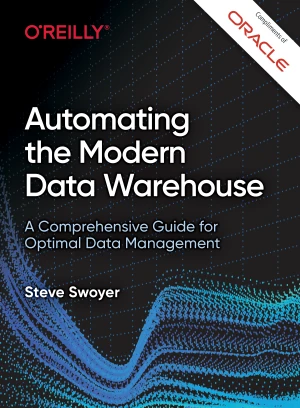
Automating the Modern Data Warehouse
The opportunity to modernize and improve the enterprise data warehouse is one of the best reasons for moving your application to the cloud. A data warehouse can access a greater diversity of use cases and practices than is possible in an existing environment. In this report, researcher and analyst Stephen Swoyer offers a comprehensive overview of t
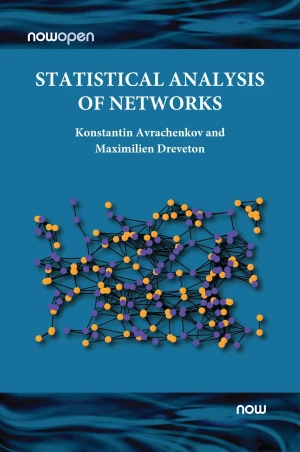
Statistical Analysis of Networks
This open book is a general introduction to the statistical analysis of networks, and can serve both as a research monograph and as a textbook. Numerous fundamental tools and concepts needed for the analysis of networks are presented, such as network modeling, community detection, graph-based semi-supervised learning and sampling in networks. The d
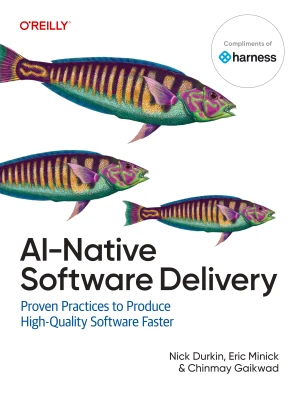
AI-Native Software Delivery
AI coding assistants are helping teams create software faster than ever. But to turn that speed into real innovation, organizations must go beyond writing code and deliver software quickly, securely, and reliably. While AI-assisted coding is now mainstream, what happens after the code is written is still catching up. AI-Native Software Delivery is
First Semester in Numerical Analysis with Python
This book is based on "First semester in Numerical Analysis with Julia". The contents of the original book are retained, while all the algorithms are implemented in Python (Version 3.8.0). The authors present Python as an open source (under OSI), interpreted, general-purpose programming language that has a large number of users around the world. Th
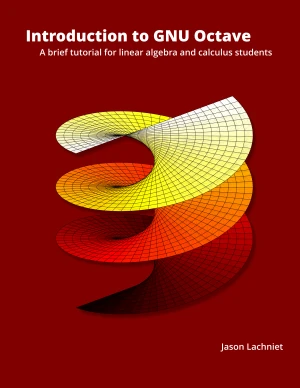
Introduction to GNU Octave, 3rd Edition
This guide introduces GNU Octave, a powerful, open-source software environment for scientific computing and numerical problem-solving. Through practical applications in linear algebra and calculus, readers will learn to leverage Octave's computational capabilities while strengthening their mathematical understanding. The text demonstrates Octave's
Algorithmic Aspects of Machine Learning
This book bridges theoretical computer science and machine learning by exploring what the two sides can teach each other. It emphasizes the need for flexible, tractable models that better capture not what makes machine learning hard, but what makes it easy. Theoretical computer scientists will be introduced to important models in machine learning a
The Crystal Ball Instruction Manual, Volume 2
This book, The Crystal Ball Instruction Manual: Volume Two, Foundations for Data Science, continues the series. The author, Stephen Davies, explains that the first volume was titled "Introduction to Data Science" because it provided an initial, broad tour of the field. He notes that the reader's continued interest indicates a readiness to explore t
The Crystal Ball Instruction Manual, Volume 1
Stephen Davies notes that if this marks the reader's first exposure to data science, they occupy an enviable position, with all the "cool stuff" still ahead of them. He expresses a sense of jealousy but also excitement to explore the field again with the reader. The text states that this field has changed the world on an incredibly short time scale
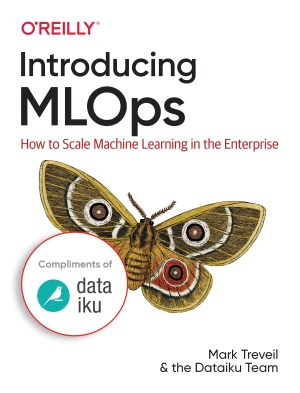
Introducing MLOps
More than half of the analytics and machine learning (ML) models created by organizations today never make it into production. Some of the challenges and barriers to operationalization are technical, but others are organizational. Either way, the bottom line is that models not in production can't provide business impact. This book introduces the ke
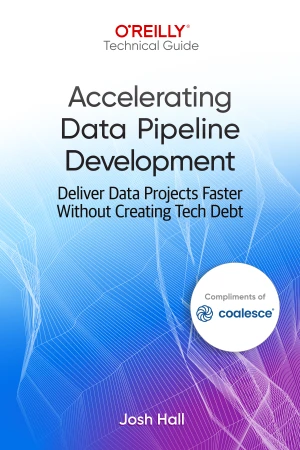
Accelerating Data Pipeline Development
Today's data engineering teams are overwhelmed - juggling fire drills and endless requests while relying on manual, repetitive processes for building data pipelines. This much-needed tech guide from author Josh Hall introduces a practical approach to streamlining pipeline development, empowering teams to work smarter, not harder. Using Coalesce, a