
Currently used at many colleges, universities, and high schools, this hands-on introduction to computer science is ideal for people with little or no programming experience. The goal of this concise book is not just to teach you Java, but to help you think like a computer scientist. You'll learn how to program - a useful skill by itself - but you'll also discover how to use programming a
Defend Dissent is an introduction to cryptography paired with the social impacts of surveillance and the protective potential of encryption, with a focus on US social movements. Each chapter ends with a story that brings social context to the material - from surveillance used against contemporary US protests to the African National Congress's use of partially manual encryption in fightin
The 1980s and 1990s were a glorious era for gaming! In just twelve short years (1982-1994) we had the Sinclair Spectrum, Commodore 64, Amiga, and Atari ST; NES, SNES, Sega Master System, Sega Genesis/Mega Drive, and Saturn right up to the Sony PlayStation. The pace of change from bitmapped graphics, through to sprite scaling and eventually 3D polygon graphics was breathtaking. We're stil
Python for Kids is a lighthearted introduction to the Python language and to programming in general, complete with illustrations and kid-friendly examples. We begin with the basics of how to install Python and write simple commands. In bite-sized chapters, you'll discover the essentials of Python, including how to use Python's extensive standard library, the difference between strings an
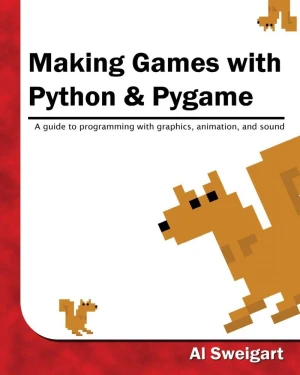
Making Games with Python & Pygame covers the Pygame library with the source code for 11 games. Making Games was written as a sequel for the same age range as Invent with Python. Once you have an understanding of the basics of Python programming, you can now expand your abilities using the Pygame library to make games with graphics, animation, and sound. This book features seven different
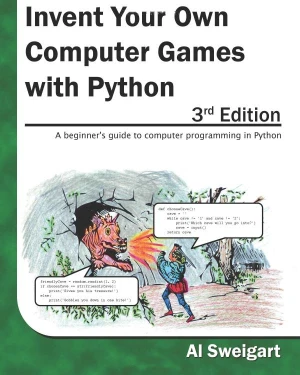
Invent Your Own Computer Games with Python teaches you how to program in the Python language. Each chapter gives you the complete source code for a new game, and then teaches the programming concepts from the examples. Games include Guess the Number, Hangman, Tic Tac Toe, and Reversi. This book also has an introduction to making games with 2D graphics using the Pygame framework. Programm
This open access book discusses "slow electronics", the study of devices processing signals with low frequencies. Computers have the remarkable ability to process data at high speeds, but they encounter difficulties when handling signals with low frequencies of less than ~100Hz. They unexpectedly require a substantial amount of energy. This poses a challenge for such as biomedical wearab
The author argues that while cryptology has a reputation for being complex and difficult to master - often associated with advanced theories like number theory, complexity theory, and quantum computation - many of its foundational concepts are actually accessible and practical. They emphasize that the best way to understand these basics is through hands-on experience, particularly by wor
Moore's law has finally run out of steam for CPUs. The number of x86 cores that can be placed cost-effectively on a single chip has reached a practical limit, making higher densities prohibitively expensive for most applications. Fortunately, for big data analytics, machine learning, and database applications, a more capable and cost-effective alternative for scaling compute performance
Sensor Technologies: Healthcare, Wellness and Environmental Applications explores the key aspects of sensor technologies, covering wired, wireless, and discrete sensors for the specific application domains of healthcare, wellness and environmental sensing. It discusses the social, regulatory, and design considerations specific to these domains. The book provides an application-based appr